
A Review of Batumi's Best Investment Areas for Discerning Investors
By Ronen Manoach · 8/6/2026
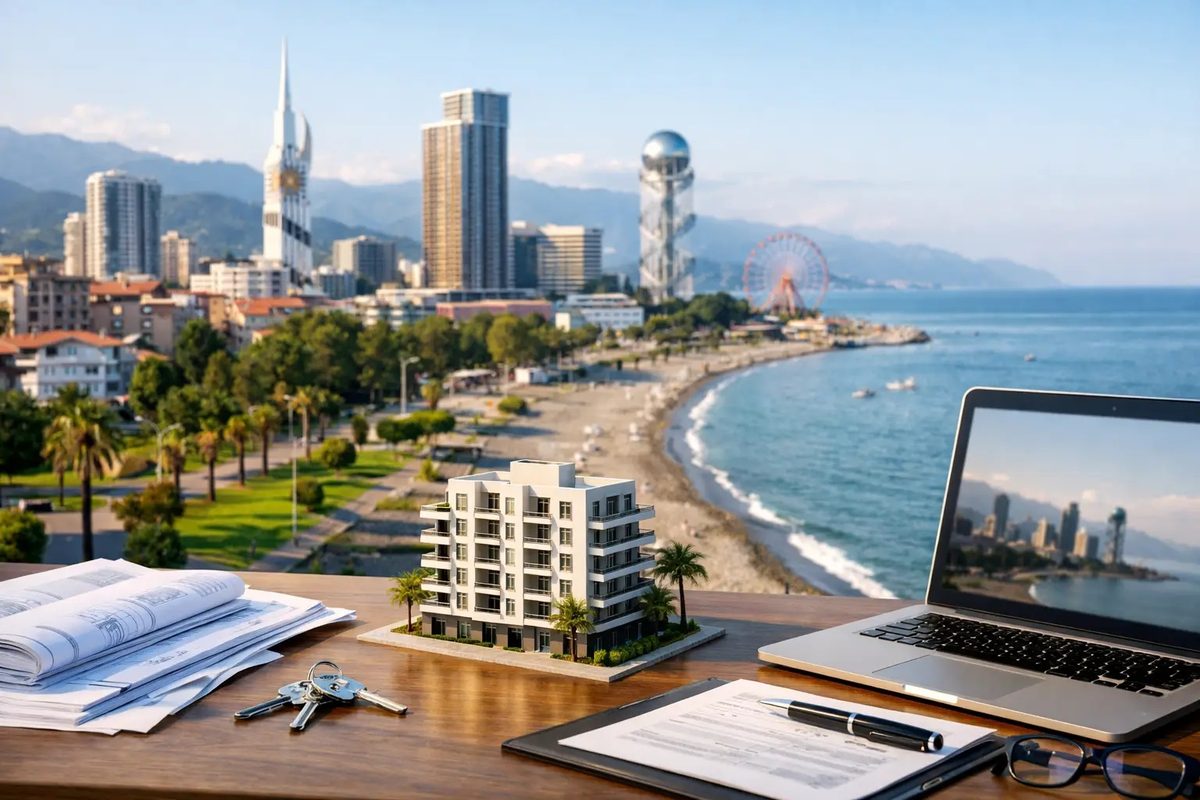
Batumi continues to benefit from a combination of interest to international investors: expanding tourism, urban development, entry prices that are still considered accessible compared to more established markets, and the possibility of generating income from a property intended for short-term rental or hotel use. But precisely because the city has grown rapidly, you have to differentiate between an area where there is real and ongoing demand and an area where the marketing is stronger than the actual performance.
Review of investment areas in Batumi - what to really check
A serious investor doesn't look at a neighborhood only by price per square meter. It checks who is expected to rent the property, what is the level of accessibility, whether there is an influx of tourists and foreign workers throughout the year, what is the quality of maintenance in the area, what is the scope of the competing supply, and whether the product is suitable for professional management who is able to translate location into income.
Batumi also has great significance for the type of building. Two properties in the same area can produce very different results if one of them operates in a hotel framework with high-level maintenance, furnishings, and service, and the other is a standard apartment without an organized operating system. Therefore, when examining an area, you must also examine the quality of the project and the management mechanism that is supposed to sustain the performance over time.
The coastline and the promenade - high demand, higher entry price
The most sought-after area for many investors is the beach strip and promenade. The reason is clear: it is the strongest tourist hub in the city, with high visibility, easy access, restaurants, entertainment, a beach, and the classic "Batumi" feel that visitors are looking for. Properties within walking distance of the sea typically enjoy stronger demand for short-term rentals, especially during the tourist season.
On the other hand, this is also an area where the entry price already reflects some of the demand. The return is not measured only by occupancy, but by the correct ratio between the purchase price, management expenses, and the level of competition. In some coastal areas there is a high concentration of similar units, so the advantage is not only the proximity to the sea, but also the ability to have a more prominent product - a high-quality building, a high standard of furniture and consistent commercial management.
For investors looking for a combination of relative liquidity, tourist attractiveness, and appreciation potential, this is a central area. However, those looking for entry at a particularly low price may find that the competition here reduces the margin of error.
The New City - A Growth Engine with appreciation potential
The areas of the new city have attracted a lot of attention in recent years, and it is not by chance. Here you see more new projects, developing infrastructure, up-to-date construction inventory, and sometimes even more attractive pricing compared to the first line to the sea. For investors, this is a space where the central question is not just what is happening today, but what will happen in three to five years.
This is an area that can be especially suitable for those who are looking for the potential for value addition alongside the possibility of generating ongoing income, provided that you choose the right point within a developing area and not just a general marketing headline. In some cases, a project that is located near a transportation axis, new tourist attractions, or future commercial development may benefit from faster improvement than an isolated and cheaper project.
The disadvantage is that the gap between a good project and a weak project can be large. In a new and developing city, there is sometimes a local surplus of supply, so careful screening is required. Anyone who works with an entity that is familiar with the land market, the rate of occupancy and the quality of the developers significantly reduces the risk of entering a location that looks promising on paper but lags behind in performance.
The old city center - less glamorous, sometimes more stable
The old Batumi Center isn't always the first area to appear in marketing materials, but for some investors it makes strong sense. It is a more active urban environment, with access to services, local commerce, institutions, and a flow that does not depend only on the summer season. In other words, there is sometimes a wider demand base, including mid-term renters and guests who prefer a functional location over direct sea views.
In terms of yield, the region may offer an interesting balance between purchase price, useful demand, and the possibility of relying less on season highs. On the other hand, not every investor is looking for the same profile. Those who focus on a distinct vacation experience and only short-term rentals may prefer a more touristic area.
The main advantage of the veteran center is that the value is not just based on a trend. When you choose the right property, in a well-maintained building and in a location with proven accessibility, you can get a product that relies on real usability and not just on a promise for the future.
Premium areas and tourist anchor points
In every growing city, there are micro-locations that receive a premium. In Batumi these are usually areas near tourist hotspots, prominent hotels, casinos, entertainment centers, or projects that generate consistent visitor traffic. This is where the business potential can be significant, especially when the property is tailored to an audience that is willing to pay more for location, standard, and service.
But let's be clear: a premium in location doesn't necessarily guarantee a premium in performance. If the purchase price is too high relative to the revenue potential, the yield can erode. Therefore, premium zones are more suitable for an investor who understands that he is buying not only cash flow, but also asset quality, future marketability, and a stronger market image.
How to choose an area according to the purpose of the investment
Those who are looking for a relatively quick current income will usually lean towards areas with proven tourism traffic, a strong management framework and a property ready for operation. In such a situation, it is sometimes better to pay a little more for a location with a clear demand history than to chase a low entry price in an area that is still looking for itself.
On the other hand, an investor who is willing to hold the property for several years and focus part of the strategy on appreciation can also look into more developing areas. This requires greater patience, but there is also a more significant potential for appreciation if the choice is made properly.
There is also a consideration of exiting. A property in a clear location, with a wide target audience and a high operational standard, will usually be simpler to sell than a property in a dim area or in a project that has no differentiation. Experienced investors know that a position is examined not only on the day of the purchase, but also on the day you want to exercise.
An overview of investment areas in Batumi through the prism of risk
One of the differences between professional investment and impulsive investment is risk management. In Batumi, the risk is not only related to the city itself, but to specific decisions: entering an unripe project, purchasing an area with excessive supply, choosing a property without an organized management system, or relying on revenue forecasts that are not backed by operational reality.
Therefore, the right area is not necessarily the cheapest area and not necessarily the most famous area. The right area is the one in which four components can be connected: sustainable demand, a quality product, professional management, and a purchase price that allows for a reasonable return even in a scenario that is not very optimistic.
This is exactly where the value of working with an entity that operates from an institutional approach and not as a one-time intermediary comes in. When there is a combination of locating a property, legal checks, understanding demand levels, coordinating financing, ongoing management, and planning a future sale, choosing the area turns from a gamble to a business decision. This is also the difference between buying an overseas property and building real exposure to an emerging market.
What do we actually look for when considering a project in Batumi
In a professional examination of investment areas in Batumi, the focus is not only on the map but on performance. We are looking for proximity to demand centers, planning a building that is suitable for effective rental, maintenance at a high level of hospitality, good visibility in the market, and a real possibility of managing the property in a way that generates income and not just looks good in the presentation.
The right property in Batumi should work in three dimensions at the same time: generate an ongoing return, maintain value in a changing market, and allow for the potential for convenient exit in the future. When one of these three elements is missing, even a deal that seems attractive at the beginning may turn out to be less effective for the investor.
Batumi still offers an interesting window of opportunity for investors looking for a combination of a relatively accessible entry price, tourism demand, and the potential for value addition. But the market is already mature enough to warrant discernment. You don't buy a city - you buy an area, a project, a management framework and a business plan.
The right location is what fits your strategy, not the one that sounds best in a sales call. When you make the decision based on data, experience, and operational control, Batumi can turn from a general opportunity into a more accurate, relaxed, and profitable investment over time.