Managed Real Estate Investment in Batumi: Who Is It Right For?
By Ronen Manoach · 8/7/2026
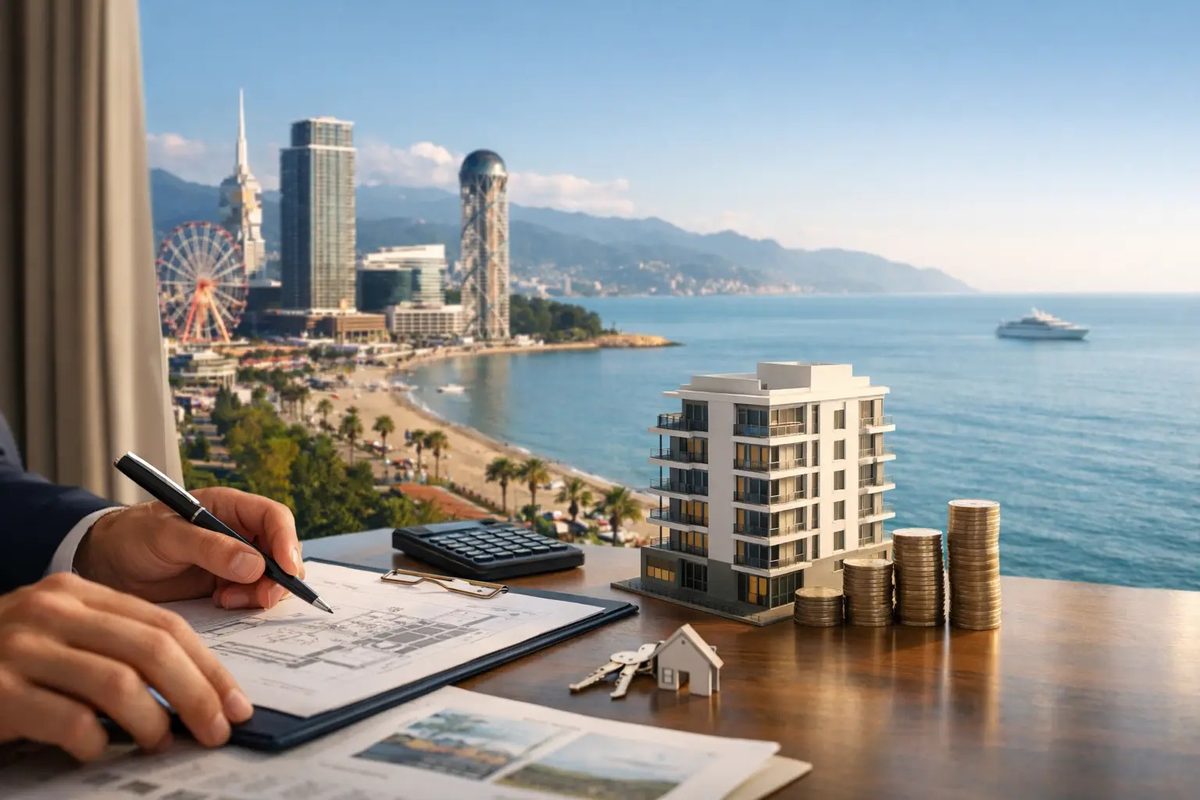
For those looking for exposure to real estate abroad without chasing tenants, dealing with cleaning, or managing suppliers from another country, this is not a technical detail. This is the difference between an asset on paper and a property that generates an orderly flow over time.
Why Batumi is on the radar of Israeli investors
Batumi is not interested in investors just because of the prices. It is interesting because of the combination of tourist traffic, urban development, a sought-after coastline, and a short-term rental model that is suitable for vacation apartments. Simply put, this is a market in which the property is not purchased only for the purpose of passive holding, but as part of a hospitality business activity.
This is an essential point. When buying a property in a major tourist area, its economic value derives not only from its meters or location, but also from its ability to work as an income-generating product. Therefore, the quality of the building, the level of equipment, the visibility of the unit, and the guest experience directly affect the yield.
For investors from Israel, there is also another advantage: a significantly lower entry threshold compared to the local market. Instead of the very high equity that is sometimes required in Israel, it is possible to invest in amounts ranging from $40,000 to $45,000, depending on the project, location and specifications. This does not mean that every transaction is good, but it does open the door for those who wish to spread risks and hold a property abroad without overloading aggressive leverage.
What is a managed real estate investment in Batumi?
The managed model is built for an investor who does not want to be the operator of the property. Instead of buying an apartment and then starting to look for a lawyer, a management company, cleaning providers, a maintenance team, and a marketing system, he enters a building where the entire chain is already arranged in advance.
In practice, a managed real estate investment in Batumi usually includes several layers: locating a suitable property, checking suitability for short-term rental, accompanying the purchase and registration, coordinating the financing process if necessary, equipping and preparing the property for hosting, managing reservations, collecting revenue, ongoing maintenance, and sometimes also support in exiting the investment when selling.
It sounds simple, but the real advantage lies in the execution. Not every property is suitable for tourism, not every management company knows how to maintain a high standard, and not every deal that seems really cheap will perform well in the market. Therefore, the value of a managed model is measured not only by convenience, but also by the ability to make the right choice and manage properly.
What the investor is really buying - an asset or an income mechanism
This is one of the most important questions. An experienced investor doesn't just look at the buy price. It examines the mechanism that is supposed to generate a return. In Batumi, especially in major tourist areas, the property is actually a base for short-term rental activities. Therefore, you need to look at several parameters together: location, accessibility, proximity to the sea or attractions, the quality of the building, the level of furniture, management costs, expected occupancy rates, and seasonality.
If one of these elements is weak, income may erode. An apartment that is too cheap in a less strong location can be more expensive in the long run, because it will suffer from low occupancy or require a price reduction to remain competitive. In contrast, the right property in a sought-after area, with a high standard of hospitality, can better maintain demand and deliver more consistent performance.
This is also the reason why many investors prefer pre-selected properties from an operational perspective, rather than just a commercial one. The goal is not just to buy cheaply, but to buy something that can sell well overnight.
The main advantage - full management reduces friction and operational risk
Most investors don't fall for the purchase itself. They fall for what happens after the purchase. An overseas property requires language proficiency, familiarity with local authorities, response to malfunctions, guest care, collection, reporting, and supervision of service standards. When all of this remains in the hands of the investor, the investment quickly turns into additional work.
Full management reduces this friction. It creates a framework where there is a single address for operations, revenue, and maintenance. For an Israeli investor, this is especially significant because geographical distance turns every small problem into a logistics story. When there is an entity that holds control from end to end, you can move from an "I hope everything will work out" approach to an "there is an orderly process that manages the property."
But here too, we have to be precise. Full management does not erase risk, it only manages it better. There is still seasonality, changes in demand, wear and tear, competition between properties, and maintenance costs. Therefore, choosing the entity that manages the property is no less critical than choosing the property itself.
Where Investors Go Wrong When Considering a Deal in Batumi
The first mistake is to focus only on the entry price. A low price creates a sense of opportunity, but without business planning, it doesn't guarantee anything. You need to understand what the net income potential is, after management, maintenance, weak periods and operating costs.
The second mistake is to rely on yield forecasts without asking how they were constructed. Is the calculation based on real annual occupancy? Does it include expenses? Does he assume a reasonable overnight rate for this type of property? A serious investor is looking for numbers that have operational logic behind them, not just a marketing promise.
The third mistake is to assume that every apartment in the city will fit the same model. In practice, there is a big difference between a centrally located property with good visibility for tourists, and a property in a weaker project or in an area with low demand. In Batumi, as in any tourism market, microlocation matters a lot.
How to Examine a Professionally Managed Real Estate Investment in Batumi
The review should start with three axes: the asset, the operations, and the strategy. At the property level, you need to check location, build quality, finishing standards, suitability for tourism, and future flexibility in the sale. At the operational level, you need to understand who is the manager, what the maintenance routine looks like, how the unit is marketed, and what is the level of service provided to the guests.
At the strategy level, the question is what is the purpose of the investment. Some investors are looking for a steady stream from the very first stages. Others are willing to absorb volatility in exchange for the potential for value appreciation over time. Both approaches are legitimate, but they lead to different choices regarding the type of property, location, and holding horizon.
Another important test relates to transparency. An investor needs to understand what the income picture looks like, what expenses are expected, what the management fee structure is, and how the ongoing reporting is carried out. A good model is one that can be explained in simple numbers, without fog.
Who is it suitable for - and who is less
Such an investment is especially suitable for those who are looking for income-producing real estate abroad but do not want to become a property manager. It is also suitable for those who understand that their time is worth money, and therefore prefer to pay for a professional framework instead of trying to manage every malfunction and every order remotely.
It can be suitable for investors at the beginning of their journey who want to enter their first property abroad for a more accessible amount, as well as experienced investors who are looking to add a tourist channel to an existing portfolio. For both types, the value is a combination of entering with a relatively low capital threshold and full management.
On the other hand, those who are looking for complete control over every operational decision, or those who expect a fixed return without seasonal fluctuations, should examine whether this model is suitable for them. Short-term rental knows how to generate higher potential, but it is less linear than regular long-term rental.
Why an end-to-end framework Changes the Quality of Investment
In the right model, the investor doesn't just get access to the property. He gets a work system. This includes connecting with legal entities, an orderly purchase process, preparing the property for the market, ongoing management, and ultimately also thinking about future exit. When all of these parts work together, the quality of the investment increases.
This is exactly the difference between a one-stop transaction and an investment move. A company like MyBatumi operates with such logic - not only to sell a unit, but to build an organized route for an investor who wants exposure to the tourism market in Batumi without managing the complexity himself.
Ultimately, a good investment isn't just measured on the day of signing. It is measured by the property's ability to remain attractive, managed, and profitable even months and years after purchase. If you are seriously looking at Batumi, don't settle for the question of how much the apartment costs - check who makes it work.