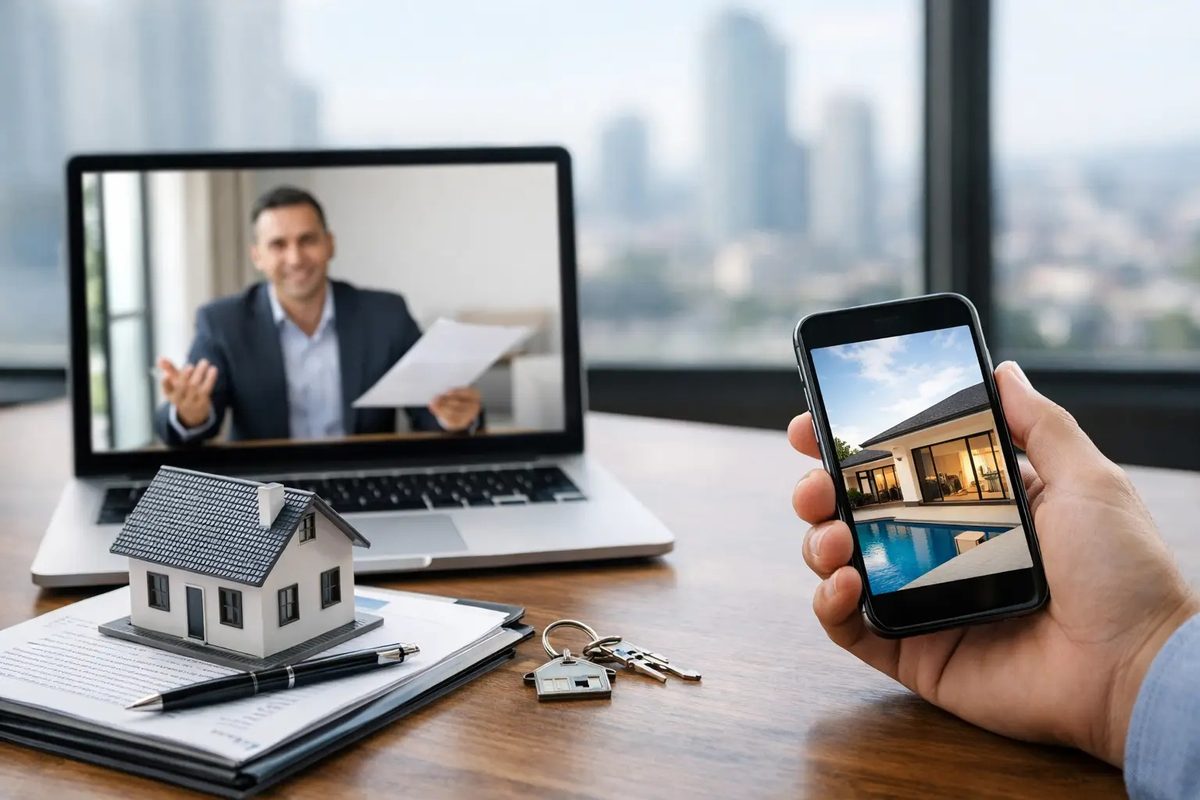
Purchasing a property from a distance has long been not an unusual move. For Israeli investors looking for geographic dispersion, entry at relatively low prices, and potential income from short-term rentals, this is sometimes the most effective way to enter the overseas market. The problem is a lack of control. And when there is no system that produces control, distance becomes a risk.
Is it possible to buy a property remotely without physically seeing it?
Yes, but not without seeing everything that really matters. A lot of investors confuse seeing a property with checking out a property. A physical visit can help with a sense of security, but it doesn't replace checking documents, checking registration, analyzing area, checking tourism demand, assessing occupancy, quality management, and real operating costs.
In other words, you can close a deal even without coming physically, as long as you have access to the right information, a local party that represents your interest, and an organized process that makes sure you don't just buy a nice picture. In real estate for investment, especially in a tourism market, the difference between a good deal and a mediocre deal doesn't start with the flooring or the lobby. It starts with the question of whether the property is properly located, priced properly, and can work operationally over time.
What really makes it possible to buy a property remotely with confidence
Remote trading doesn't rely solely on trust. It relies on a mechanism. A serious investor should make sure that there is someone who locates the property, inspects it, accompanies the purchase, arranges the registration, coordinates the legal aspect, and manages the property after the purchase. If one of these parts is missing, he no longer buys a property remotely - he takes a bet remotely.
This is exactly the point where full service changes the whole equation. Instead of dealing with several separate parties in a foreign country, the investor works with a body that coordinates the entire process. This is especially important in markets like Batumi, where the potential for entry is relatively convenient, but the actual outcome is highly dependent on the choice of location, the standard of the property, and the quality of ongoing management.
The right question is not only whether it is possible to buy a property remotely, but also whether it is also possible to hold it remotely and derive a return from it. This is where the quality of the real deal is measured.
Where Most Investors Fall for Remote Trades
The first mistake is to fall in love with the price of admission. A property that looks cheap can be very expensive if it sits in a weak area, if demand is unstable, or if maintenance erodes income. Many investors see an entry number of $40,000 to $45,000 and feel the risk is low. In practice, a low purchase price does not guarantee a good deal. What determines is the ratio between price, operational potential, and the ability to sell in the future.
The second mistake is to rely on general return promises. Return in tourism real estate is not a fixed number. It depends on occupancy, price per night, seasonality, property rating, marketing, and day-to-day management. That's why you have to look at a business plan and not a password. An investor needs to understand what a reasonable scenario is, what an optimistic scenario is, and where the equilibrium point is.
The third mistake is to think that the purchase is the end of the road. In practice, the purchase is only the beginning of the investment. A property that is bought properly but poorly managed will lose income, ranking, and in the end also value. In a property designed for short-term rentals, the quality of management is part of the return, not an ancillary service.
How to check if a remote transaction is really built properly
The first step is choosing the market. Not every market is suitable for an Israeli investor looking for passive investment. We need to check accessibility, stability of demand, regulation, entry prices, potential for appreciation, and tax structure. A good market is not only a market where you can buy cheaply, but a market in which you can operate properly and realize it in the future.
The second step is the selection of the property itself. Here we need to look beyond the presentation. Is this a central area with proven tourist traffic? Is the product suitable for short-term rentals? Is the level of finish and equipment compatible with the target audience? Can the property compete with quality accommodation, or will it be eroded by better offerings?
The third stage is the legal and proprietary protection. Even if you don't fly to sign, you can't skip an orderly legal check, a rights check, a clear agreement, and an orderly registration process. Purchasing remotely doesn't mean taking a shortcut. On the contrary. It requires stronger documentation, higher control, and clearer procedures.
The fourth stage is the post-purchase management. If there is no local body that handles marketing, reception, cleaning, maintenance, collection, and ongoing reporting, the investor is left with a property that is his/her own - but doesn't really work for him. A good overseas investment should be managed like a business.
Is it possible to buy a property remotely and remain passive?
Yes, but an investor's passivity is not created by itself. It is the result of professional operation. An investor is not supposed to deal with it on a daily basis, but someone else must deal with it at a very high level. The more it is a hospitality property, the more critical it is. There is not a single tenant per year. There is turnover, reviews, cleanliness, maintenance, dynamic pricing and seasonality.
This is also the reason why it is not enough to buy a property in a sought-after city. You need to buy a property that fits the income model you are aiming for. In Batumi, for example, not every apartment on the tourist map will function in the same way. There is a difference between a centrally located property with a high standard of hospitality and a cheaper property that will struggle to generate stable demand throughout the year.
An investor looking for passive income should ask not only how much the asset costs, but also who manages it, what the standards look like, how the reporting is done, and what the exit strategy is in the future. These are questions of an investor, not of a buyer of a residential apartment.
When it is not advisable to buy a property from a distance
There are times when it is better to stop. If you don't have full transparency about the numbers, if there is no professional entity that maintains real activity in the field, if it's not clear who is responsible for each stage, or if the yield seems too high relative to the market - that's a warning sign. A remote transaction must be simple to understand even if it is complex to execute.
Even an investor who must feel every wall and every tile before making a decision, needs to know himself. There are people for whom distance creates permanent restlessness. In that case, it's better to either fly and see, or choose a different investment model. Peace of mind is part of the return.
On the other hand, those who understand investments, know how to work with numbers, and are looking for a well-managed model, can find that remote purchasing saves time, reduces friction, and allows you to operate in an attractive market without turning the investment into a personal project.
What an Investor Should Demand Before Moving Forward
Before you proceed, you need to ask for a full picture. Not only the purchase price, but also closing costs, furniture costs if any, management fees, maintenance, realistic revenue forecast, schedules, and how to register. The clearer the picture is in advance, the lower the risk.
You also need to understand who is accompanying the deal after the signing. A company that sells a property and disappears does not solve the main problem of remote investing. On the other hand, a model that combines locating, purchasing, registration, management, and further support creates a layer of security that is almost as important as the property itself. This is one of the factors that turn investing abroad from a complicated process into an orderly business move.
In such models, such as the one offered by MyBatumi to Israeli investors looking for premium tourism properties in Batumi, the advantage is not only in access to the properties. The advantage is in controlling the entire chain - from detection to ongoing operation. For an investor who doesn't want to manage suppliers in a foreign country, this is a fundamental difference.
Buying a property remotely can be a very smart investment decision, but only when you stop asking if it's possible and start checking if it's built properly. The distance doesn't have to be a deterrent. It simply requires a higher level of inspection, support and management. When you have the right people around you, the property doesn't have to be close to home to work like a really good property.